HubSpot Alternatives for Startups (2026): The AI-Native Shortlist


•
•
The best HubSpot alternative for a startup depends on the motion you’re running, but if you’ve outgrown HubSpot because the setup no longer fits, the strongest 2026 pick is Attio, an AI-native CRM you shape around your business instead of the other way round. Pipedrive, Close, Folk, Salesforce, Zoho, and Freshsales each win a narrower slice, and I’ll say exactly where below.
Most “HubSpot alternatives” lists rank tools by sticker price. That misreads why startups actually leave. The trigger is rarely the monthly number on its own. It’s the renewal cliff after the startup discount ends, the custom objects locked behind the Enterprise tier, and the growing tax of keeping a rigid setup alive as your motion changes. So this shortlist judges each option on three things: the data model, the AI, and the fit for how your team sells.
The three picks most startups should start with:
Top pick | Best for | Why it wins |
|---|---|---|
Attio | Outgrowing HubSpot on data model | AI-native, custom objects at $79/seat, models PLG and usage motions |
Pipedrive | A simple, sales-first pipeline | The cheapest fast path to a clean pipeline reps adopt on day one |
Close | High-volume outbound | Calling, email, SMS, and an AI sales agent built in |
The full seven, scored on data model, AI, and startup fit, are below.
HubSpot is a strong first CRM. The free tier is real, the onboarding is smooth, and for a marketing-led team it does a lot in one place. The problems show up later, and they cluster into three.
The first is the renewal cliff. HubSpot for Startups gives eligible teams up to 90% off year one, 50% off year two, and 25% off year three if you come through an approved VC or accelerator, or 30% off year one through partner programs. Those discounts are generous, and they’re also the reason so many founders go shopping in month ten. A team that paid a discounted rate in year one can face something close to full commercial pricing at renewal, and budgets built on the year-one number get caught out. The discount was never the price. It was a runway.
The second is the data model tax. HubSpot works best when your business fits its predefined structure of contacts, companies, and deals. The moment you need to model something it wasn’t designed for, a product workspace, a usage-based account, a fund and its portfolio, you hit a wall. Custom objects, the feature that would solve this, are locked to the Enterprise tier at $150 per seat per month plus a $3,500 onboarding fee, per HubSpot’s own Sales Hub pricing. Attio’s published customer stories make the pattern concrete: Modal switched off HubSpot specifically because it could not model workspaces, and Railway moved because a metered, usage-based motion could not live in a contacts-and-deals schema.
The third is scope creep in the bill. HubSpot’s marketing tools are a separate product. Sales Hub Professional runs $90 per seat per month on annual billing plus a one-time $1,500 onboarding fee, and Marketing Hub Professional is its own line item on top. What looked like one platform becomes several, and the “all-in-one” saving quietly reverses.
None of this makes HubSpot a bad product. It makes it the wrong shape for a fast-moving startup whose motion doesn’t look like the template. If that’s you, judge the alternatives on what actually breaks.
Before the list, the framework. These three axes decide whether a CRM will still fit you in eighteen months.
Data model is whether the CRM can represent your business, not a generic sales team. Can you create the objects you actually track, connect them with real relationships, and reflect a PLG, usage-based, or account-based motion? A rigid model is the thing you outgrow first.
AI is whether intelligence is built into the core or bolted on and up-sold. AI-native CRMs enrich records, draft and research inside workflows, and answer questions about your pipeline in plain language, without you gluing three tools together. In 2026 this is the axis moving fastest.
Fit is the boring one that decides adoption. The right tool matches your team size, your budget curve as you add seats, and the way your reps already work. A CRM your team won’t use is the most expensive option on any list.
I started from the HubSpot alternatives startups actually shortlist, then scored each out of five on the three axes above. The scores are my own judgment from setting these systems up as an Official Attio Expert Partner, not vendor marketing, and I verified every price on the vendor’s own pricing page the week this guide went live. Where a tool is strong on one axis and weak on another, the score shows it rather than rounding into a single vague verdict.
Prices are the entry paid tier, per seat per month on annual billing. Scores are out of five for data model, AI, and startup fit.
CRM | Best for | Data model · AI · Fit | Price from |
|---|---|---|---|
Attio | Outgrowing HubSpot, AI-native GTM | 5 · 5 · 5 | $0–$79 |
Pipedrive | Simple visual sales pipeline | 2 · 3 · 4 | $14-$79 |
Close | High-volume outbound teams | 2 · 4 · 4 | $19-$149 |
Folk | Agencies and solo founders | 3 · 3 · 4 | $24-$80 |
Salesforce | Teams heading to enterprise | 5 · 4 · 2 | $25-$175+ |
Zoho CRM | Budget all-in-one breadth | 4 · 4 · 3 | $0-$52 |
Freshsales | Built-in AI on a tight budget | 3 · 4 · 4 | $9-$60 |
Score: Data model 5/5 · AI 5/5 · Startup fit 5/5
Best for: Seed to Series B teams whose motion (PLG, usage-based, account-based) has outgrown HubSpot’s structure.
Pricing: Free up to 3 seats, Plus $35 (up to 10 seats), Pro $79 per seat/mo (annual), Enterprise custom. No onboarding fee (Attio).
Data model: Fully flexible. Build custom objects on Pro, connect them with two-way relationships, model workspaces and usage natively.
AI: Native. AI attributes, an AI research agent inside workflows, call intelligence, Ask Attio, and an MCP server for Claude and other agents.
The catch: Not a full marketing suite. Email and sequences, but no landing pages, ads, or large-scale nurture.
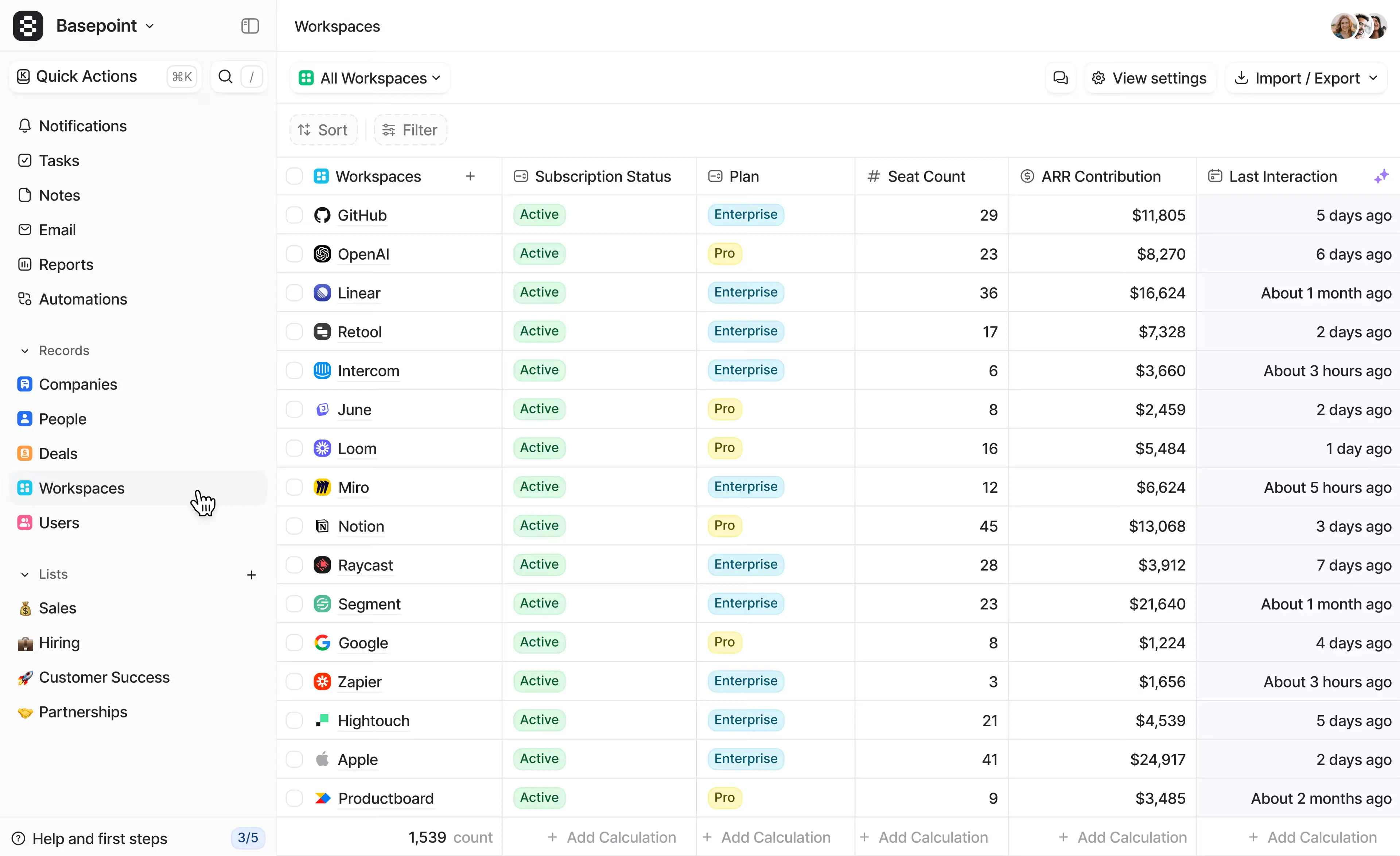
Attio is the pick when the reason you’re leaving HubSpot is the setup itself. Founded in 2017 and backed by roughly $116M including a $52M Series B led by GV, it’s the fastest-growing CRM vendor on Ramp’s category data, now fourth by adoption and pulling ahead of Pipedrive on both first-time adopters and switchers. Its own customer stories show the exact pattern this post is about: Modal left HubSpot because it could not model workspaces, and Railway moved because a usage-based motion could not live in a contacts-and-deals schema. It reviews at 4.3 out of 5 across 500-plus G2 reviews.
Bottom line: The marketing-suite gap is a real trade, and for most seed to Series B teams it’s the right one, because that work usually belongs in a dedicated tool anyway. What decides whether Attio pays off is the model you build on day one, which is the Attio implementation work I do as an Official Attio Expert Partner. For the platform end to end, start with our complete Attio guide for startups, or the direct matchup in our Attio vs HubSpot comparison.
Score: Data model 2/5 · AI 3/5 · Startup fit 4/5
Best for: Sales-first teams that want reps moving deals, not a marketing suite.
Pricing: Lite $14, Growth $39, Premium $59, Ultimate $79 per seat/mo (annual). No free plan, 14-day trial (Pipedrive).
Data model: Fixed. People, organizations, deals, and activities, with custom fields but no custom objects.
AI: Improving (Pipedrive Pulse for prospecting), less mature than the AI-native tools.
The catch: Add-ons like LeadBooster and Campaigns are priced separately, so the real cost creeps.
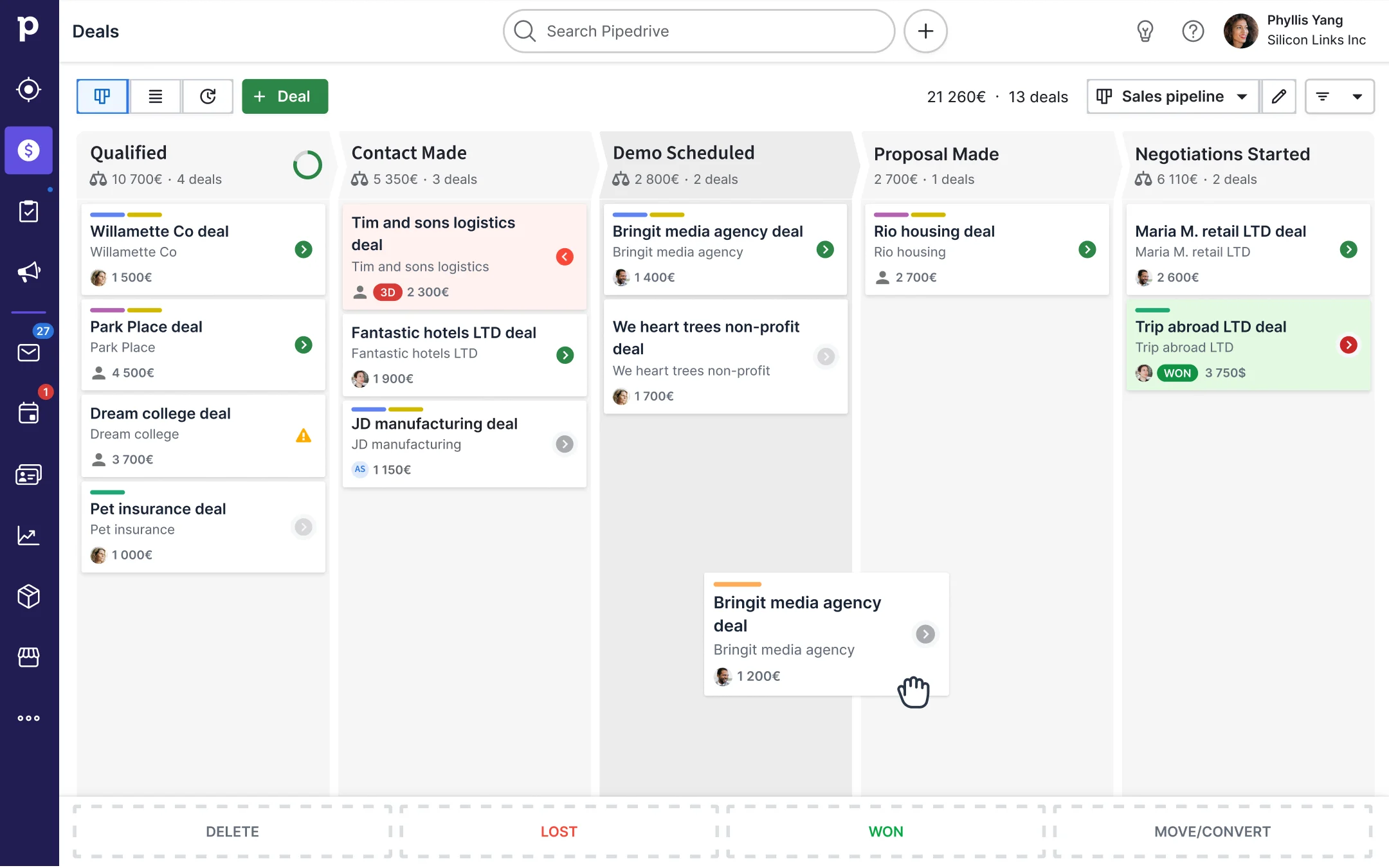
Bottom line: Pipedrive is the cleanest answer if HubSpot feels too broad and you just want a pipeline reps understand on day one. Pick it when simplicity is the feature and your motion is textbook. The fixed model is exactly why it stays simple, and why it resists anything unusual.
Score: Data model 2/5 · AI 4/5 · Startup fit 4/5
Best for: SDR-heavy and inside-sales teams optimizing for rep velocity.
Pricing: From $19 per seat/mo (Solo, or $9 annual) up to $149 (Scale) (Close).
Data model: Fixed and sales-shaped, a system of action rather than a flexible system of record.
AI: Built-in. An AI sales agent, Chloe, plus monthly AI credits on every plan.
The catch: Not built for product-led or account-based motions, or for cross-functional teams.
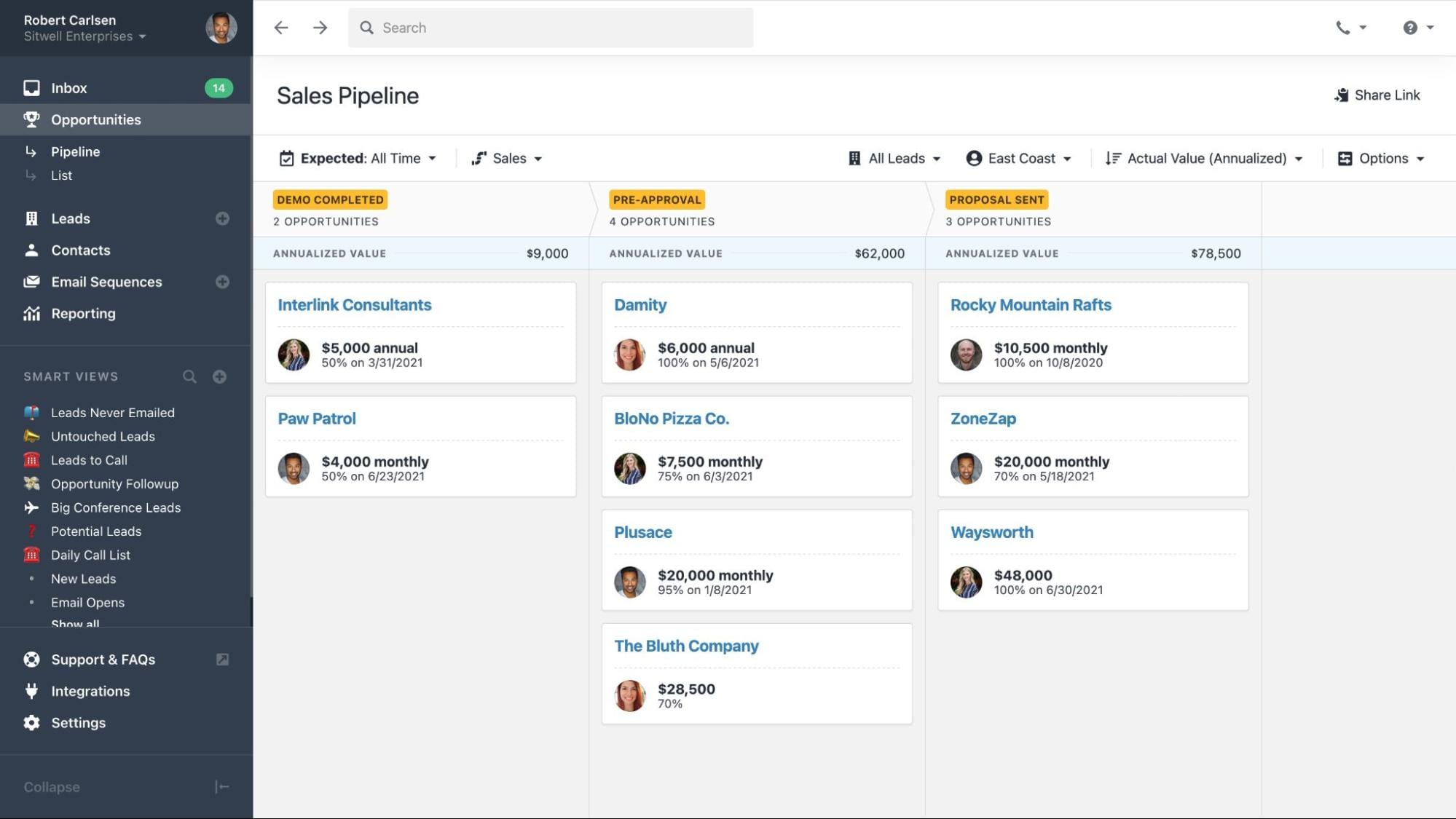
Bottom line: Close puts calling, email, and SMS inside the CRM instead of behind integrations, which is the whole point for a team living in outbound. If throughput is the number you optimize, few tools beat it. If you need a system of record you will bend around a usage-based motion, look higher up this list.
Score: Data model 3/5 · AI 3/5 · Startup fit 4/5
Best for: Agencies, consultancies, and solo founders who run on relationships and partnerships.
Pricing: Standard $24, Premium $48, Enterprise from $80 per member/mo (annual) (Folk).
Data model: Light. Custom objects and deals unlock on Premium.
AI: Useful. Magic fields and AI assistants, plus a strong LinkedIn extension.
The catch: The structure a scaling startup wants sits on the higher tier, and it stays deliberately light.
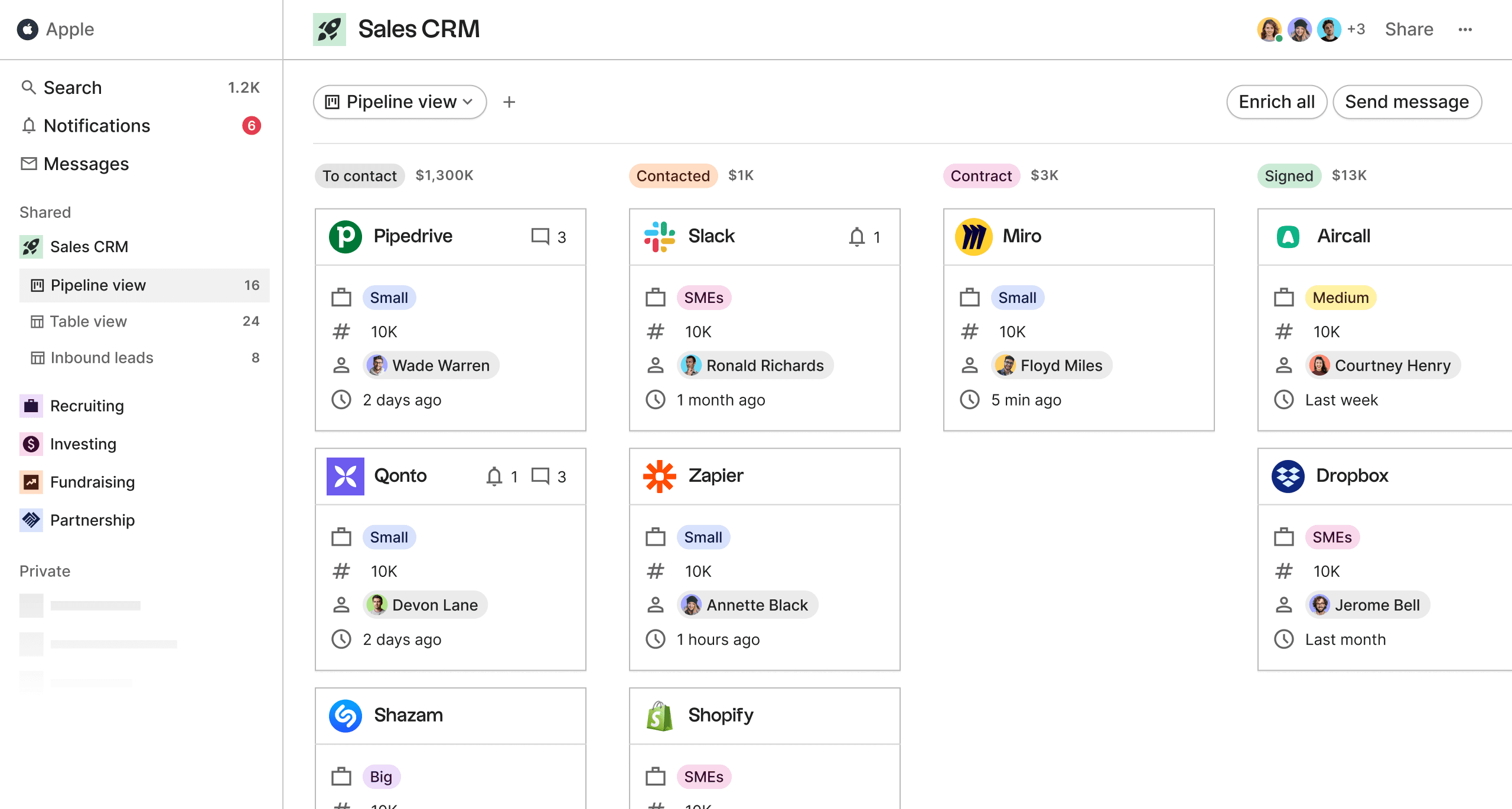
Bottom line: Folk is fast and pleasant, and for a network-driven business it is a joy to use. For a metered product motion it runs out of room, which is the line we draw in our Attio vs Folk breakdown.
Score: Data model 5/5 · AI 4/5 · Startup fit 2/5
Best for: Teams that can already see the enterprise stage and have the resources to run it.
Pricing: Starter Suite $25, Pro Suite $100, Enterprise $175 per seat/mo, AI gated to $175+ (Salesforce).
Data model: Highly customizable, and heavy. It can model almost anything.
AI: Deep (Agentforce, Einstein), but reserved for the upper tiers.
The catch: Real total cost of ownership. Five and six-figure implementations, and usually a dedicated admin.
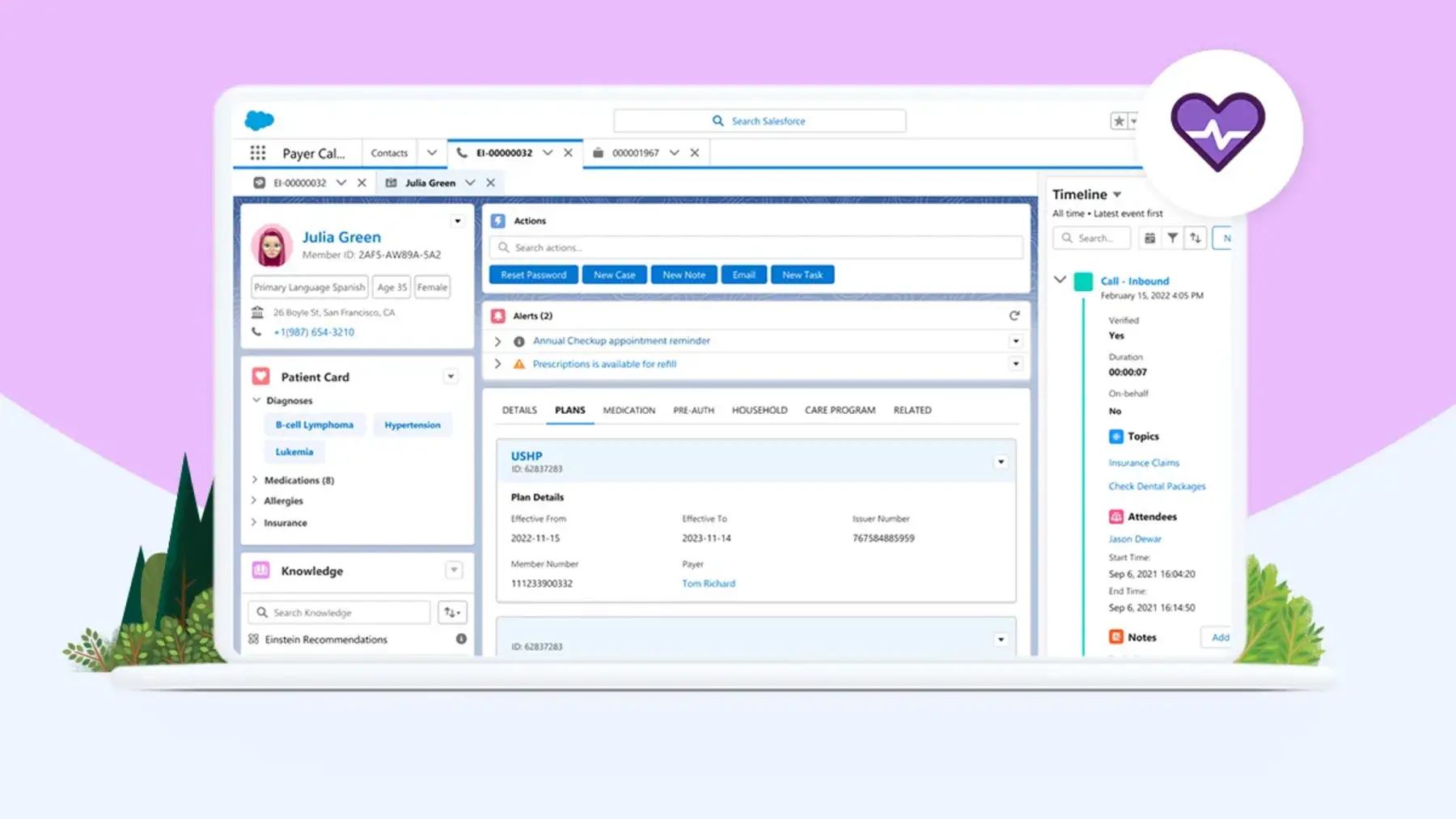
Bottom line: Salesforce earns its place only when you are buying the ceiling, not the entry price. The power is real, and so is the operational weight, which is why it is overkill for most seed-stage teams still finding their motion.
Score: Data model 4/5 · AI 4/5 · Startup fit 3/5
Best for: Teams that want HubSpot-like breadth across sales, marketing, and service, cheaply.
Pricing: Free up to 3 users, paid plans from $14 per seat/mo (Zoho).
Data model: Flexible modules, more customizable than HubSpot.
AI: Zia adds lead scoring and predictions on higher tiers.
The catch: The interface can feel dense, and the breadth adds friction for a team that just wants speed.
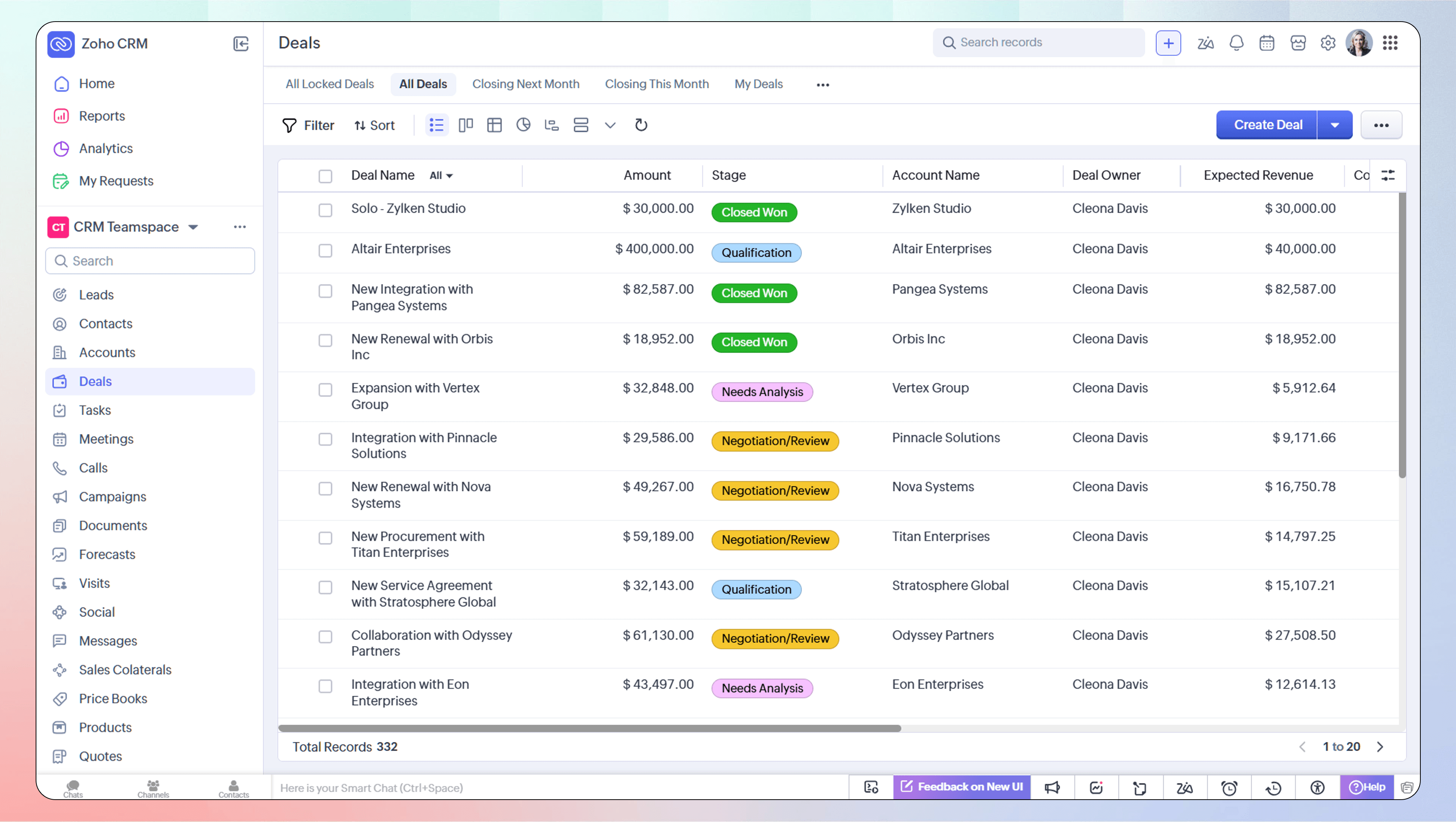
Bottom line: Zoho is the closest thing to HubSpot’s scope at a fraction of the cost. If maximum features per dollar is the goal, it is hard to beat. If a clean, fast surface matters more to your team, it is not the one.
Score: Data model 3/5 · AI 4/5 · Startup fit 4/5
Best for: Lean teams that want capable AI without a heavy suite or a big bill.
Pricing: Free up to 3 users, Growth $9, Pro $39, Enterprise $59 per seat/mo (annual) (Freshsales).
Data model: Custom modules, more than a bare pipeline tool.
AI: Freddy AI for lead scoring and prioritization, included earlier than most rivals.
The catch: Won’t match HubSpot’s marketing mindshare or a specialist outbound tool’s depth.
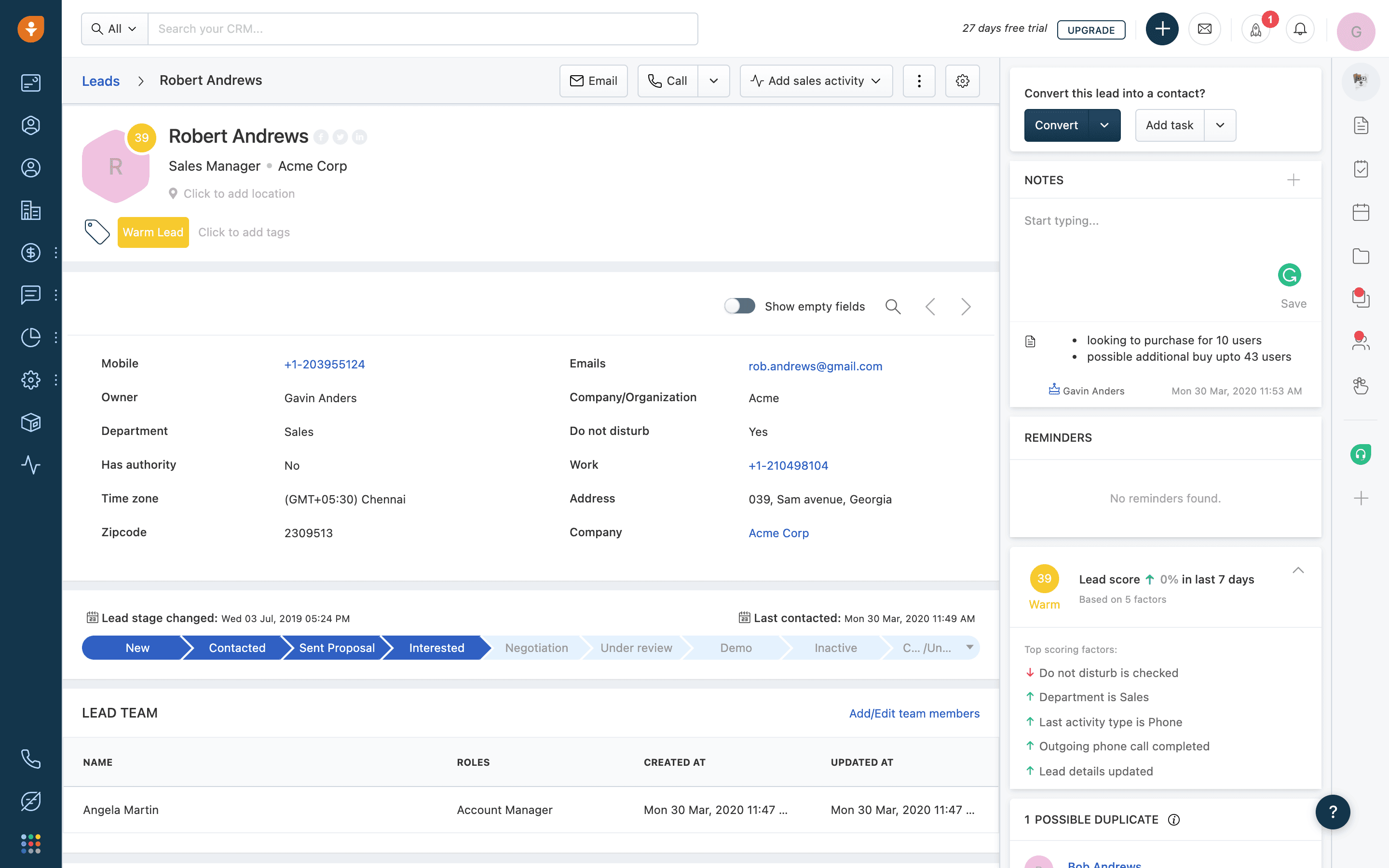
Bottom line: Freshsales is the middle ground between a bare pipeline and a full suite, with a built-in phone and email that keep small teams in one place. For a team watching every dollar, the value is strong.
Here’s the reframe on price done properly, as year-one cost including onboarding, at the seat counts startups actually grow through. Attio Pro and Pipedrive Growth carry no onboarding fee. HubSpot Sales Hub Professional adds its one-time $1,500.
Seats | Attio Pro | HubSpot Sales Pro | Pipedrive Growth |
|---|---|---|---|
5 | $4,740 | $6,900 | $2,340 |
10 | $9,480 | $12,300 | $4,680 |
20 | $18,960 | $23,100 | $9,360 |
The gap widens the moment you need custom objects. On Attio they’re included at Pro, $79 per seat per month. On HubSpot they’re locked to Enterprise at $150 per seat per month plus a $3,500 onboarding fee. That single line is often the whole reason a growing startup’s HubSpot bill jumps, and it’s the clearest argument for judging on data model instead of headline price. Verify current pricing on each vendor’s site before you buy, because these lineups get repackaged often.
Balance matters here, because leaving a tool that fits you is its own kind of expensive. If your growth engine is inbound marketing, blog and landing-page production, email nurture at scale, forms, and lead scoring all wired into the CRM, HubSpot is still excellent and most of the alternatives above won’t replace it one-for-one. Marketing-led teams that want a single vendor across marketing, sales, and service, and whose data model fits contacts, companies, and deals cleanly, often have no real reason to move.
The teams that should move are the ones leaving for structural reasons: a product-led or usage-based motion HubSpot can’t model, custom objects you don’t want to pay Enterprise pricing for, or a renewal quote that no longer matches the value. If that’s you, the mistake is treating the switch as a data export. It isn’t. The value is in redesigning the model so the new CRM fits your motion, which is where getting it set up right up front pays for itself.
The mechanics are the easy part. Attio offers a free Import2 migration for customers on paid plans that pulls contacts, companies, deals, and history straight from HubSpot, plus a CSV importer and an API for anything custom. Pipedrive, Zoho, and the others have their own importers too.
The real work is deciding what your data should become on the other side, not moving rows one-to-one. A clean import of a messy HubSpot instance just gives you a messy new CRM. Our guide on migrating from HubSpot to Attio walks through doing it as a redesign, and if you’re still weighing the whole category, start with our best CRM for startups breakdown.
If you take one thing from this guide, take the match between your situation and the tool. Scored on data model, AI, and startup fit, Attio is the strongest overall pick for a startup leaving HubSpot because the setup stopped fitting, and each specialist below wins its own lane.
Your situation | Best pick |
|---|---|
Outgrew HubSpot’s data model (PLG, usage, workspaces) | Attio |
Want a simple, visual sales pipeline | Pipedrive |
High-volume outbound with calls and SMS | Close |
Agency or solo founder, relationship-driven | Folk |
Already heading to enterprise, with resources to run it | Salesforce |
Maximum breadth on the tightest budget | Zoho or Freshsales |
Whatever you pick, the switch only pays off if the data model is right on day one. That is the part worth doing deliberately, and the part I help startups get right.
For most startups leaving HubSpot because the setup no longer fits, Attio is the strongest 2026 choice thanks to its flexible data model and native AI. Pipedrive wins for a simple sales pipeline, Close for high-volume outbound, and Zoho for budget breadth. The best choice depends on your motion, not a single ranking.
Yes. Attio, Zoho CRM, and Freshsales all offer free plans for up to three users, and Close and Pipedrive run free trials rather than free tiers. Free plans are fine for early validation, but check the seat and object limits before you commit, because that’s usually where startups outgrow them fastest.
Pipedrive from $14 per seat per month, Freshsales from $9, and Zoho from $14 all undercut HubSpot’s Sales Hub Professional at $90 per seat plus its $1,500 onboarding fee. The bigger saving is structural: alternatives that include custom objects at their mid tier avoid HubSpot’s jump to Enterprise at $150 per seat.
Yes, especially for AI-native and product-led teams. Attio lets you build custom objects on the Pro plan, models usage-based and workspace motions HubSpot can’t, and puts AI in the core. Published switchers like Modal and Railway left HubSpot for exactly these reasons. It’s a weaker fit if you need a full inbound marketing suite.
Threads on r/sales and r/CRM tend to point toward cheaper, simpler tools, Pipedrive and Zoho for basic pipeline needs, and options with built-in calling for outbound teams. The recurring theme is that HubSpot gets expensive and heavy for what many startups actually use, which matches what the pricing shows.
The software cost is often lower, not higher: Attio Pro at five seats runs $4,740 in year one against roughly $6,900 for HubSpot Sales Hub Professional. The real investment is the setup and migration time. Done as a redesign rather than a raw export, that time is what makes the new CRM actually stick.
Sparsh Gupta, Founder of Automation Jinn and an Official Attio Expert Partner, helps seed to Series B startups leave HubSpot without losing momentum, rebuilding the data model and workflows so the new CRM drives revenue. If you want your move off HubSpot planned and built properly, book a discovery call.